

Why Outbond Games is Effective to Improve Teamwork
Outbound or team building event is the moment that employees have been waiting for. But did you know, outbound is not just a means of unwinding from work, but it can be a means of increasing collaboration between employees. During outbound, several games are conducted. Outbound games are highly effective in improving teamwork for various reasons.
Hands-on Experience
Outbound games provide a hands-on and practical learning experience for team members. Instead of theoretical discussions, participants engage in real-life scenarios that require collaboration and problem-solving.
Enhanced Communication
These games often necessitate clear and effective communication among team members to achieve specific objectives. Participants learn to express ideas, listen actively, and convey instructions concisely.
Trust Building
Outbound games often involve activities that require team members to rely on each other. This fosters trust among team members, as they experience firsthand the importance of trusting their colleagues to achieve common goals.
Identifying Strengths and Weaknesses
Through outbound games, team members can identify their own strengths and weaknesses as well as those of their peers. This awareness allows them to allocate tasks more effectively based on individual capabilities.
Collaboration and Cooperation
Outbound games typically demand collaboration and cooperation to succeed. Participants learn to work together as a cohesive unit, pooling their resources and expertise to accomplish shared objectives.
How can Rafting Help Improve Teamwork Skills?
Teamwork is a foundation of whitewater rafting. Rafting demands clear communication and trust among team members, working together to navigate rough waters. Learning to paddle in sync, read the river, and make quick decisions helps build strong teamwork skills. It fosters cooperation and unity, enhancing overall team performance.
Problem-Solving Skills
Many outbound games present challenges and obstacles that require innovative problem-solving approaches. Team members must brainstorm, strategize, and think critically to overcome these hurdles.
Conflict Resolution
Sometimes conflicts arise during team building activities. These moments become opportunities for participants to practice conflict resolution and learn to handle disagreements constructively.
Motivation and Morale
Successfully completing outbound games can boost team morale and motivation. Achieving collective goals provides a sense of accomplishment, fostering a positive team spirit.
Stress Reduction and Fun
Outbound games offer a break from routine work, reducing stress levels. The fun and enjoyable nature of these activities create a positive atmosphere, enhancing team bonding.
Long-Lasting Impact
Participants often remember the lessons learned from outbound games long after the activities conclude. The shared experiences and insights gained tend to resonate with team members and influence their future interactions.
Adaptability and Resilience
Outdoor team-building activities often expose participants to unpredictable environments. This helps team members develop adaptability and resilience in the face of changing circumstances.
Celebration of Diversity
Team members come from diverse backgrounds, and outbound games celebrate this diversity. Participants learn to appreciate different perspectives and work collectively, respecting individual differences.
Popular Outbound Games for Team Building
Several games are widely known as fun and need a strong teamwork in order to be done. Don’t forget to prepare some door prizes to make the games more interesting.
Minefield
Set up an obstacle course with various objects scattered on the ground (the “minefield“). Blindfold one member of each team and have their teammates guide them through the minefield using only verbal instructions. The objective is to navigate the course without stepping on any “mines.”
Pipeline
Divide the team into smaller groups. Provide each group with sections of a PVC pipe. The objective is to transport a ball from one end to the other using only the pipes, without dropping the ball. This game requires coordination and cooperation to succeed.
Team Ski
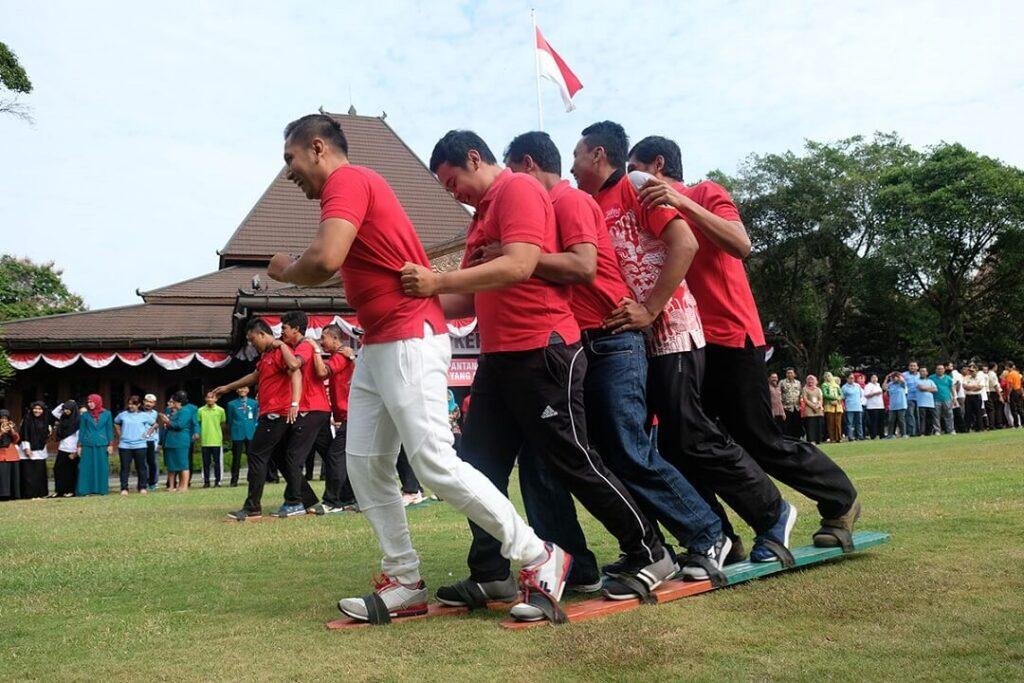
Use wooden boards or old skis and have team members stand on them in a single line. The challenge is to walk together as a team, maintaining coordination and balance. In Indonesia, this game is called lomba balap bakiak. It is quite popular and also often performed during independence day celebration.
Helium Stick
Have the team form two lines facing each other. Place a long and lightweight rod (the “helium stick”) on top of their index fingers, keeping it horizontal. The objective is to lower the stick to the ground as a team without letting it fall.
Egg Drop
Provide each team with limited materials (straws, tape, newspapers, etc.) and an egg. The teams must create a contraption that will protect the egg from breaking when dropped from a height. This game promotes creativity, teamwork, and critical thinking.
Island Survival
Imagine the team is stranded on a deserted island. Give them a list of items they can use, and they must prioritize and decide which items are essential for their survival. This activity encourages collaboration and decision-making.
Blind Polygon
Blindfold all team members and provide each of them with a rope. The team must form a specific polygon shape (e.g., triangle, square) using only verbal communication. This game emphasizes effective communication and trust.
Spider’s Web
Another game popular for team building is Spider’s Web. Ropes are used to create a “spider’s web” between two trees or posts. The aim is for the group to pass through the web without touching it. Every hole can not be used more than once.
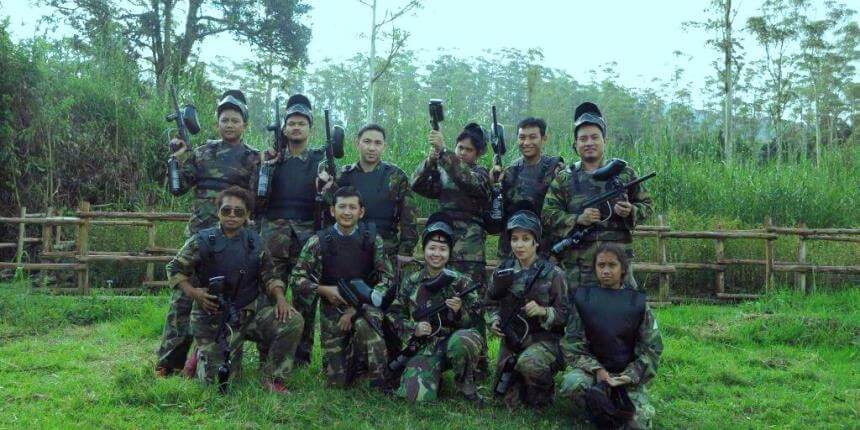
In conclusion, outbound games are not only enjoyable but also effective in fostering teamwork, communication, trust, problem-solving, and collaboration among team members. Terantara is experienced in performing outbound or team building for reputable companies in Indonesia. We are aiming to create a positive and enjoyable learning environment, leaving a lasting impact on your team dynamics and effectiveness.
0 Comments